Clinical Trial Enrollment
Access to brain and spine tumor research studies at New Jersey's only NCI-designated comprehensive cancer center, with a team that explains every step before you decide anything.
What Is a Clinical Trial?
A clinical trial is a research study that tests a new treatment, or a new way of using an existing treatment, in people. Every treatment now considered standard for brain tumors, including the chemotherapy and radiation protocols used for glioblastoma, became standard because patients enrolled in trials that proved it worked. Trials in neuro-oncology today are testing new drug combinations, immunotherapies, targeted therapies matched to a tumor's molecular profile, novel radiation approaches, and devices.
Trials move through phases, and the phase tells you what question the study is asking. A Phase 1 trial asks whether a new treatment is safe and what dose people can tolerate, usually in a small group of 15 to 30 patients. A Phase 2 trial asks whether the treatment appears to work against the cancer, in a larger group. A Phase 3 trial compares the new treatment directly against the current standard, often in hundreds of patients, with participants assigned to groups by chance so the comparison is fair.
Where you are treated affects which trials you can reach. Rutgers Cancer Institute is the only NCI-designated comprehensive cancer center in New Jersey, a designation the National Cancer Institute reserves for centers that meet rigorous standards for research alongside patient care. That designation comes with trial access most hospitals do not have, including early-phase studies through the institute's investigational therapeutics program. Dr. Sherman leads the neurosurgical oncology clinical trials program at Rutgers Cancer Institute and has published more than 130 peer-reviewed manuscripts.
A trial is not a replacement for treatment. In cancer trials, participants generally receive at least the standard of care for their disease. A trial adds something being studied on top of, or in place of, a specific part of that care, and the trial team explains exactly what before you sign anything. For some patients a trial is part of the plan from the first visit. For others it becomes relevant later, if the tumor returns after standard therapy.
Call our office at 732-235-6333 or send us a message.
The information on this page is general educational information and is not medical advice. It does not create a doctor-patient relationship or reflect a treatment recommendation for any individual. Treatment decisions require an individual evaluation by a qualified physician.
Conditions with Active Trial Relevance
Clinical trials are part of the treatment conversation across most of the conditions Dr. Sherman treats. Each condition page covers symptoms, diagnosis, and the full range of treatment options.
- GlioblastomaTrials enroll at diagnosis and at recurrence, testing new drugs, immunotherapy, and devices.
- High-Grade GliomaMolecular profiling often opens targeted-therapy and immunotherapy studies.
- Low-Grade GliomaTrials study targeted agents matched to mutations found at diagnosis.
- Brain MetastasesStudies test combinations of radiation and systemic therapy matched to the primary cancer.
- Spine MetastasesTrials examine new radiation approaches and systemic options for spinal disease.
- EpendymomaA rare tumor where trials offer structured options beyond standard therapy.
- Peripheral Nerve TumorsStudies are testing medical therapies for nerve sheath tumors and NF-related disease.
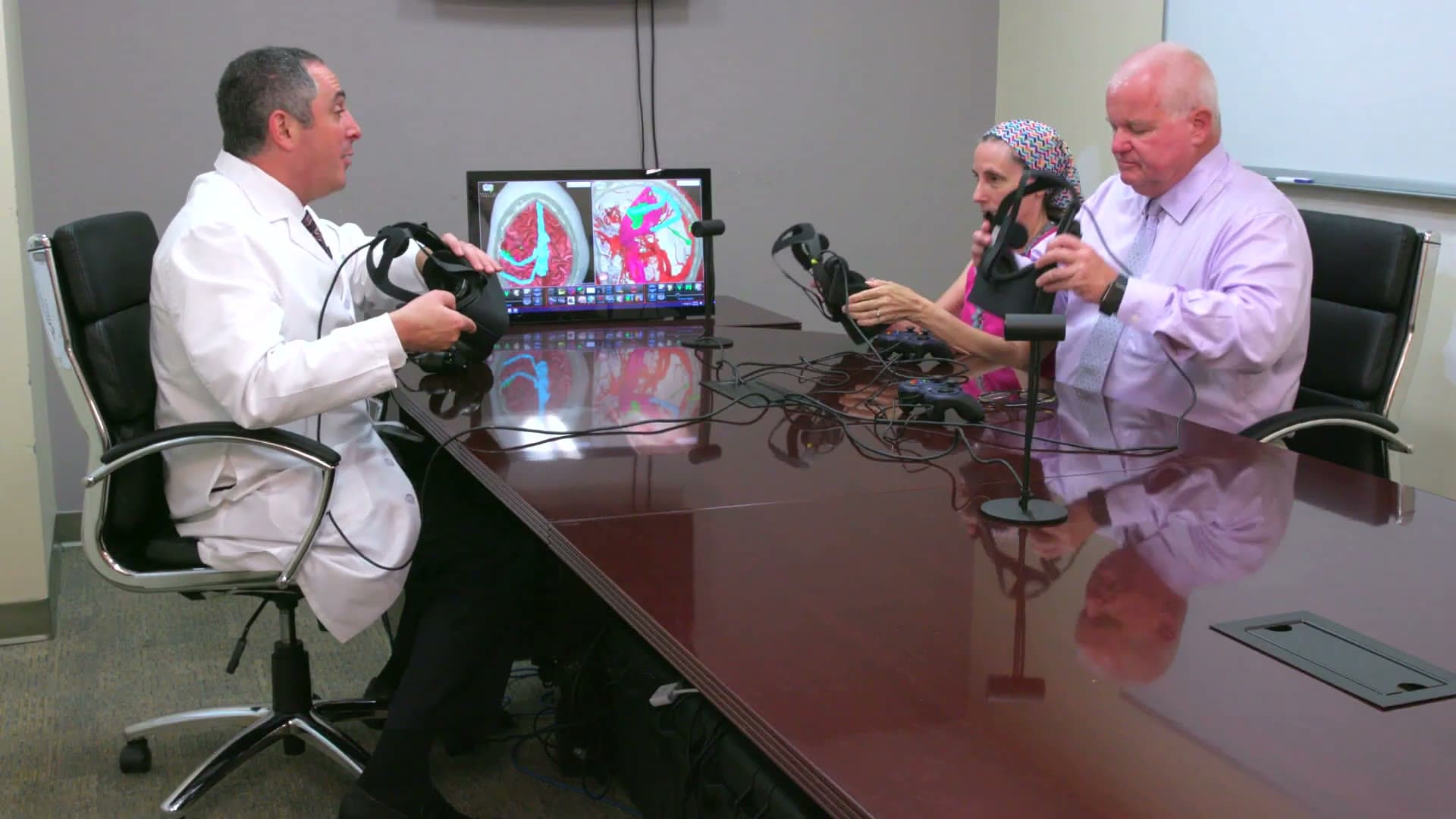
Using XR Technology To Advance Medical Care
Dr. Sherman integrates VR and AR visualization into surgical planning and patient education, giving patients a clearer picture of their diagnosis and the approach to treatment.
Common Questions About Clinical Trials
No. Placebos are rarely used in cancer treatment trials, and no one is given a placebo alone when an effective treatment exists for their cancer. When a placebo is used at all, it is typically added to standard treatment, so one group receives standard care plus the study drug and the other receives standard care plus placebo. If a trial involves a placebo, you are told before you enroll.
Wondering Whether a Clinical Trial Fits Your Situation?
Dr. Sherman is accepting new patients at Rutgers Cancer Institute in New Brunswick, New Jersey. Whether you are newly diagnosed, facing a recurrence, or weighing options after a second opinion, a consultation is the place to ask which trials are enrolling.